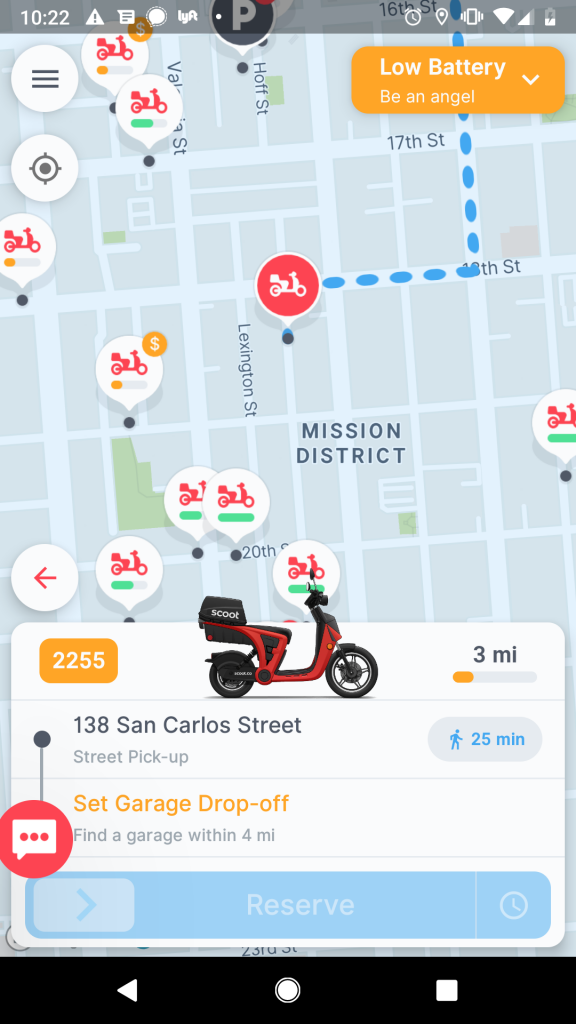
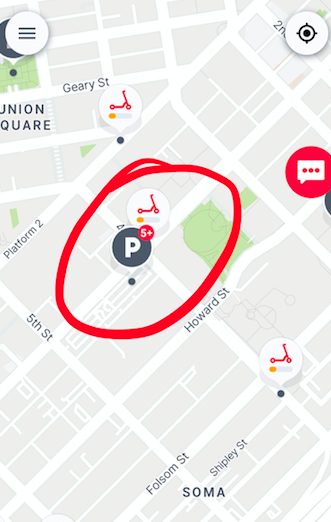
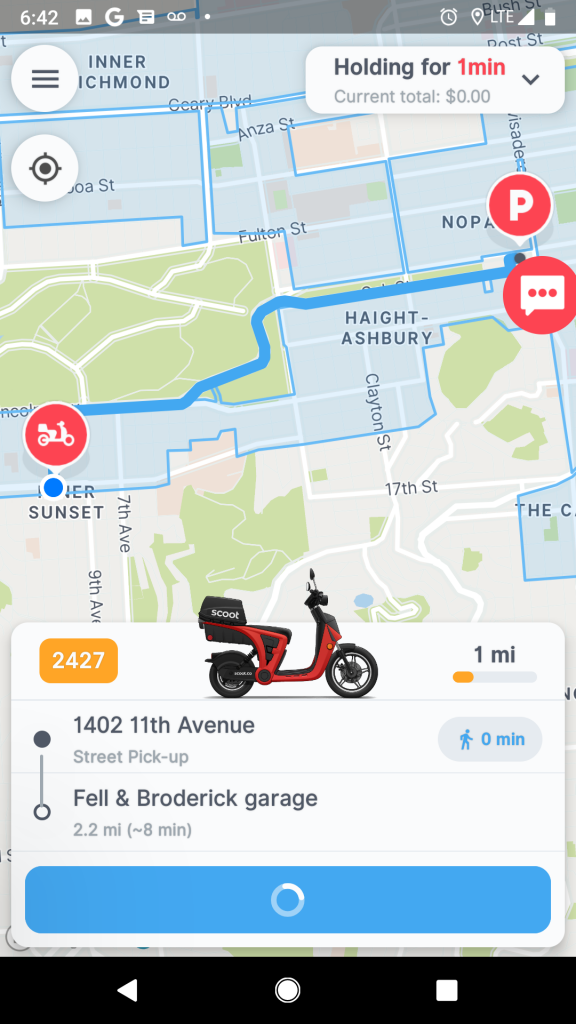
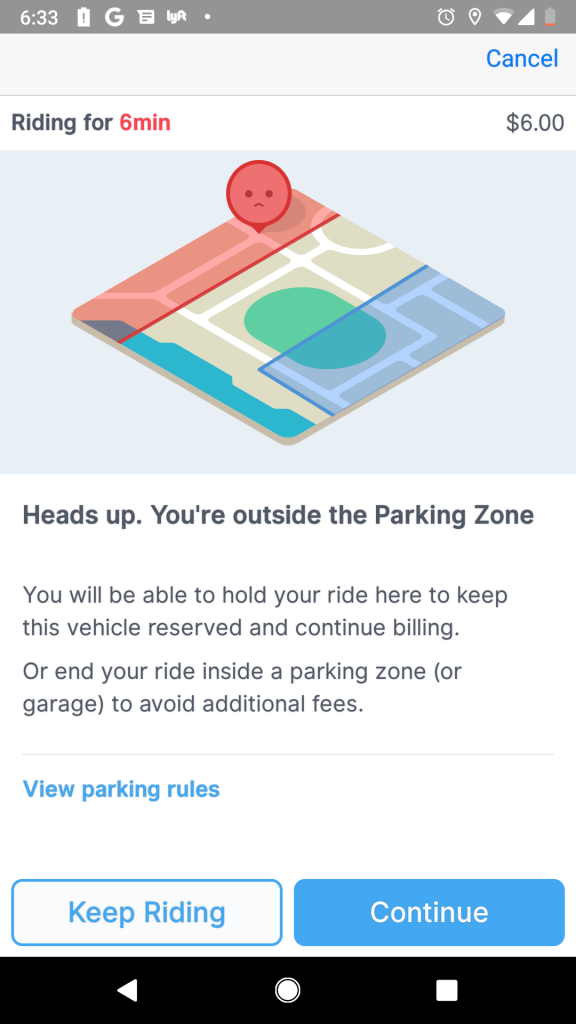
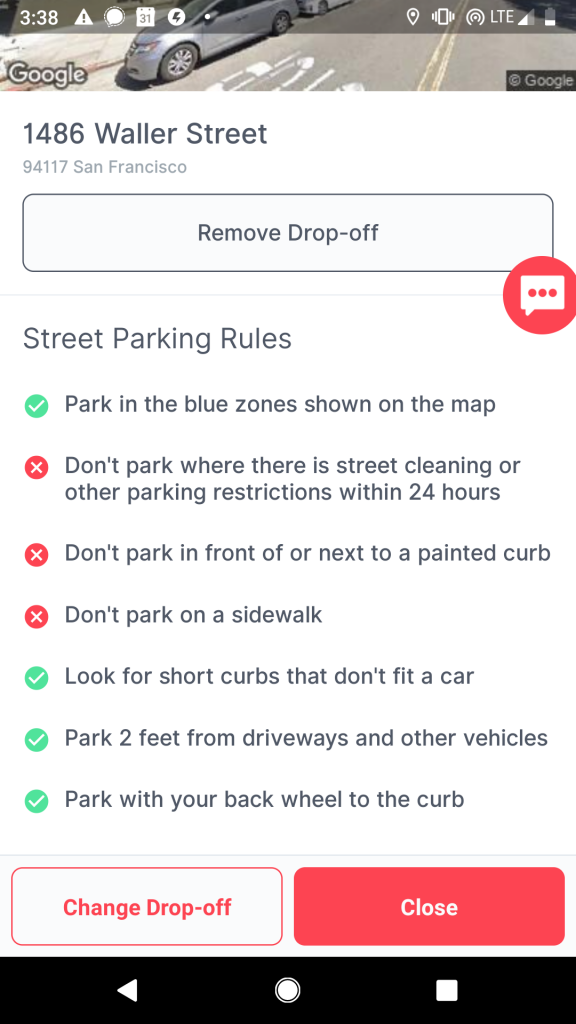
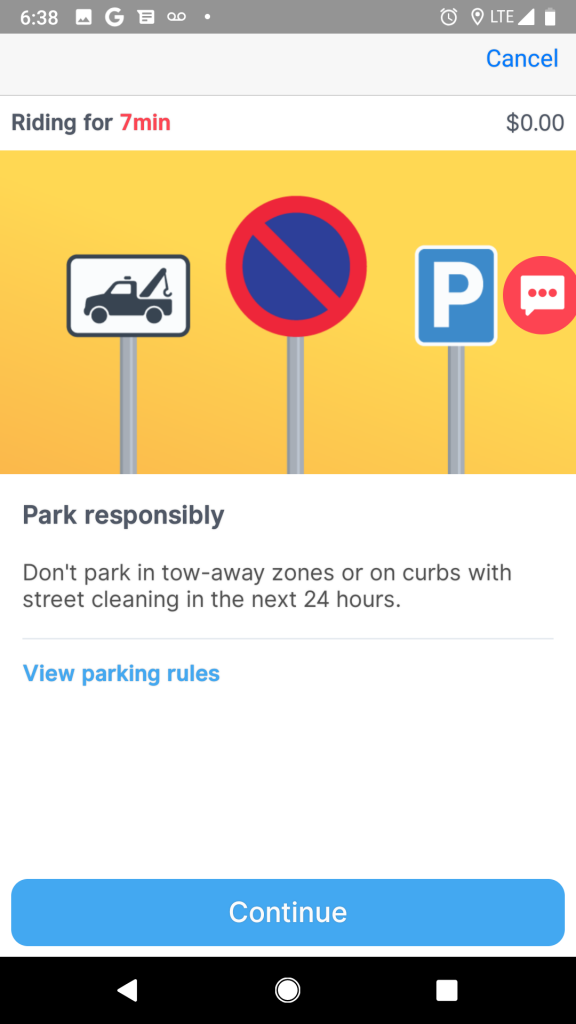
as the senior customer experience at scoot networks, i had a permaculturist’s sit spot to learn the workings of a successful business operating in mobile tech and sustainable transportation. my user research identified a massive opportunity to reduce traffic citation liabilities for customers (a significant customer retention issue) and developed strategies to make parking regulations (and scoot parking guidelines) more transparent through the app’s user interface – designing to educate the customer and reduce confusion and real-world friction and frustration in a complex system.
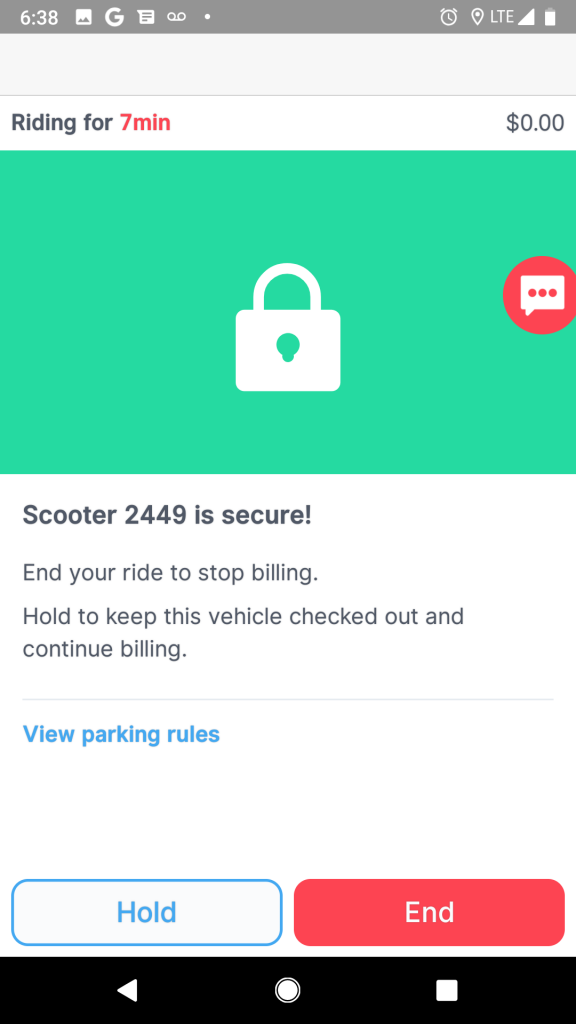
user interface design challenges identified include: 1) improvement of visual cues to notify rider of a low-battery vehicle and create an incentive to return the vehicle to the garage; 2) display garage capacity with no button presses to decrease user friction; 3) disallow user to select a garage that is outside of the selected vehicle’s battery range; 4) increase app friction to warn user of potential liabilities to parking on the street, with 5) parking rules clearly outlined in-app for new riders and 6) additional friction to notify user that they are parking outside of scoot’s parking area, which was calibrated to decrease liability (internal mapping software not shown); 7) remedy the order and time-delay between when the physical scooter has turned off, when credit card billing has ended, and when the customer is notified of both events.